
 Stanislaw Oleksiejuk
 09.11.2026
Bikini laser hair removal This is the solution for people who are fed up with constant shaving, ingrown hairs and irritation in their intimate areas. The problem becomes particularly noticeable in the summer. The swimming pool, the beach, a holiday trip or figure-hugging underwear – daily shaving can quickly become a tiresome chore.
It doesn’t have to be that way.
Bikini laser hair removal It helps to reduce the growth of unwanted hair in the long term and minimise the problems associated with traditional hair removal methods. The treatment involves the use of laser light energy, which targets the melanin in the hair and damages the structures responsible for its growth.
At Wellclinic, we use state-of-the-art laser technologies, including solutions featuring the TEC cooling system, which help to ensure your comfort during the procedure. Before treatment begins, a specialist assesses the condition of your skin, your hair type and any potential contraindications.
Have a look at what it looks like laser hair removal for intimate areas, how to prepare for it and how many sessions are needed to achieve satisfactory results.
Table of contents
Laser bikini hair removal – what does the treatment involve?
Bikini laser hair removal involves removing unwanted hair using a concentrated beam of light. Laser energy It is absorbed by melanin, the natural pigment found in the hair shaft. It is then converted into heat, which affects the structures of the hair follicle responsible for hair growth.
Not all hairs are in the same growth phase at the same time. The laser is most effective on hairs that are in the anagen, which is why it is necessary to undergo a series of treatments at appropriate intervals.
It is worth remembering that laser depilation It is not a one-off removal of all hair. Regular sessions allow you to gradually achieve long-term hair reduction, and its extent depends, amongst other things, on hair colour and thickness, skin phototype and the individual’s bodily response.
Which areas does laser bikini hair removal cover?
The scope of the treatment can be tailored to individual needs. The most common options are:
- Classic bikini - hair removal from the groin and the area outside the underwear line.
- High-cut bikini - covers a larger area of the intimate regions, including the mons pubis and selected areas of the labia.
- Brazilian bikini - a comprehensive range of hair removal treatments, which may also include the area between the buttocks.
- Hair removal from the buttocks - hair removal from a selected area of the buttocks.
The exact scope of the treatment is determined before the procedure begins. This is important both for the patient’s comfort and for ensuring the correct selection of the device’s settings.
What is the step-by-step process for laser bikini hair removal?
A first visit often brings with it a sense of uncertainty. That’s only natural. Intimate areas They are particularly sensitive, which is why many people wonder whether the treatment is painful, how they should prepare, and whether they need to undress completely during the procedure.
The procedure begins with a consultation with a specialist. During the consultation, expectations, skin condition, hair type and any possible contraindications are discussed.
Next:
- The specialist prepares the treatment area and checks the condition of the skin.
- The patient is provided with disposable underwear appropriate to the nature of the procedure.
- Only the area to be treated is exposed.
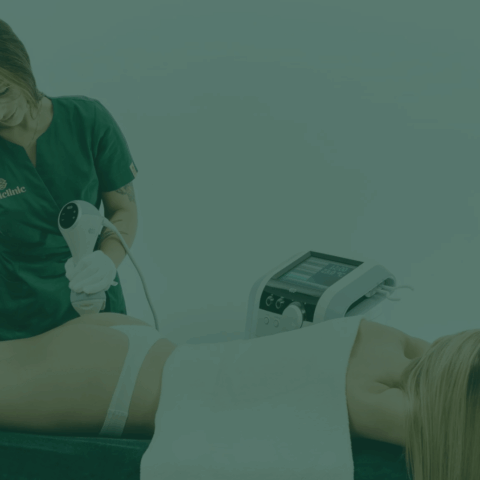
- The specialist carries out the treatment, adjusting the laser settings to suit the patient’s individual needs.
- Once the treatment is complete, she provides advice on skin care and protection.
The whole process is carried out whilst maintaining privacy and hygiene standards. There is no need to expose your entire body at once.
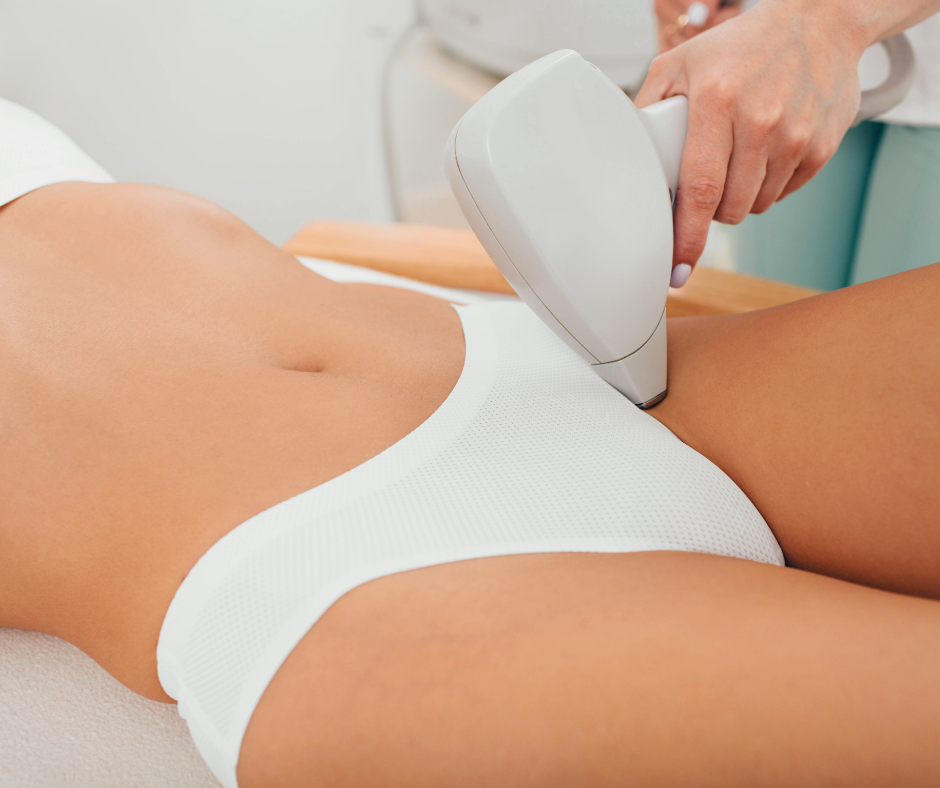
Does laser bikini waxing hurt?
This is one of the most frequently asked questions before a first appointment. The sensations experienced during the treatment vary from person to person and depend, amongst other things, on one’s pain threshold, hair density, the treatment area and the technology used.
Patients most often describe the sensations as brief pricks or a feeling of warmth. The intimate areas may be more sensitive than other parts of the body, which is why comfort during the procedure is particularly important.
The technology used at Wellclinic is based on TEC cooling system It helps to minimise the sensation of heat during the treatment. However, this does not mean that everyone will undergo the procedure without any discomfort.
How should you prepare for laser bikini hair removal?
Proper preparation of the skin is essential for the safety and successful outcome of the treatment. Before your appointment, you should follow the specialist’s advice and take into account the requirements of the specific laser technology.
Key rules:
- Avoid sunbathing the treatment area before your appointment. A recent tan may increase the risk of side effects.
- Do not use sunbeds or self-tanning products.
- The day before the procedure, shave your head with a razor, if this is what your specialist has recommended.
- Do not remove hair with wax, an epilator or tweezers, as pulling the hair out by the root reduces the laser’s effectiveness.
- Avoid using harsh exfoliants and irritating cosmetics on the treated area.
- On the day of your appointment, your skin should be clean and free from lotions, oils and other cosmetics.
If you are taking any medicines or preparations that may increase your sensitivity to light, please inform your specialist. Do not stop taking any medicines on your own.
Before the procedure, it is also necessary to assessment of contraindications. Factors requiring particular attention include, amongst others, active skin infections, a recent tan, the use of certain photosensitising medicines, and selected dermatological conditions and treatments.
How often should you have laser bikini hair removal?
Bikini laser hair removal requires regularity. This is because the hair growth cycle. The laser is most effective on hairs in the active growth phase, whilst the remaining hairs may require further sessions.
In the case of the bikini area the intervals between treatments are often aroundby 6 weeks, although the exact schedule should be determined by a specialist.
The number of sessions required depends on individual factors, hormonal balance, hair colour, hair thickness and how the hair has responded to previous treatments.
Once the course of treatment has finished, some people may find that a few stray hairs appear, requiring follow-up treatments.
What are the results of laser bikini hair removal?
The most significant result is a gradual and long-lasting reduction in hair growth. With each subsequent session, the hairs may become sparser, finer and weaker.
Bikini laser hair removal It can also minimise the problems typically associated with traditional shaving, such as:
- ingrown hairs,
- pimples and irritation caused by shaving,
- redness of the skin,
- frequent micro-damage to the epidermis,
- the discomfort associated with regular hair removal.
It is worth bearing in mind that results vary from person to person. Not every hair type responds to the laser in the same way.
Bikini laser hair removal - contraindications
Although laser depilation Although it is a commonly performed procedure, not everyone can undergo it at any time. Before starting treatment, you should inform the specialist about your state of health, any medicines you are taking and all products you apply to your skin.
Contraindications or situations requiring individual assessment include, amongst others:
- pregnancy,
- active infections and inflammation in the treatment area,
- a fresh tan,
- the use of photosensitising medicines and substances,
- certain skin conditions,
- active tumours or selected cancer treatments,
- the use of retinoids and other products that affect skin sensitivity.
The final assessment is made by a specialist. It is not worth skipping this stage, even if you have had laser hair removal before.
Laser bikini hair removal – how should you look after your skin after the treatment?
After laser bikini hair removal The skin may be temporarily red, slightly swollen or more sensitive to touch. Such reactions may occur following a correctly performed procedure and usually resolve on their own.
After the treatment, it is advisable to:
- use gentle, soothing and moisturising skincare products,
- avoid hot baths and saunas for the period recommended by a specialist,
- Do not exfoliate the treated area until the irritation has subsided,
- avoid friction and wearing very tight underwear immediately after the procedure,
- protect the skin from UV radiation.
If you experience severe discomfort, blisters or symptoms that do not subside, you should contact a specialist.
How much does laser bikini hair removal cost?
Price of laser bikini hair removal It depends primarily on the treatment area chosen, the technology used and the number of sessions required to achieve the desired result.
A different price may apply to classic bikini, and another a high-cut or Brazilian-style bikini. In the case of men, the scope of treatment may also vary.
Before starting treatment, it is worth checking current price list and discuss the scope of the procedure with a specialist. This will enable you to plan the entire hair-reduction process more effectively.
Is laser bikini hair removal right for you?
If shaving causes irritation and ingrown hairs, and needs to be repeated constantly, laser depilation might be a solution worth considering.
It’s not just about smooth skin. It’s also about greater comfort in everyday life, fewer problems associated with mechanical hair removal, and the chance to reduce how often you use a razor.
Sources:
1. American Academy of Dermatology „Laser Hair Removal: An Overview”
https://www.aad.org/public/cosmetic/hair-removal/laser-hair-removal-overview/
2. Cleveland Clinic „Laser Hair Removal: How it Works & What to Expect” https://my.clevelandclinic.org/health/treatments/21757-laser-hair-removal
3. American Academy of Dermatology „6 Ways to Remove Unwanted Hair”
https://www.aad.org/public/everyday-care/skin-care-basics/hair/remove-unwanted-hair
4. Cleveland Clinic „Ingrown Pubic Hair: Symptoms, Causes, Treatment & Prevention” https://my.clevelandclinic.org/health/diseases/ingrown-pubic-hair
5. American Academy of Dermatology „How to Shave”
https://www.aad.org/public/everyday-care/skin-care-basics/hair/how-to-shave
6. ACOG „To Shave or Not to Shave: An Ob-Gyn’s Guide to Pubic Hair Care”
https://www.acog.org/womens-health/experts-and-stories/the-latest/to-shave-or-not-to-shave-an-ob-gyns-guide-to-pubic-hair-care
Book a consultation





 +48 600 100 177