
 Katarzyna Pawłowska
 02.09.2026
 Table of contents
Combination skin combines the characteristics of oily and dry or normal skin. Most commonly on the forehead, nose and chin - the so-called. T zones, there is increased sebum production, whilst the cheeks and the sides of the face remain drier or properly moisturised. This skin type can be challenging to look after, as different areas of the face have different needs.
Appearance and condition combination skin These can vary with age, the season, hormonal changes and environmental conditions. In summer, the skin often becomes oilier, whilst in winter, dry areas may feel tight and become prone to irritation. The skin’s condition is also influenced by how it is cared for. Over-cleansing can exacerbate dryness, whilst heavy skincare products can increase the likelihood of blackheads forming.
Characteristics of combination skin
The most distinctive feature of this skin type is the difference between the T-zone and the rest of the face. Zone T It may become shiny quickly, have more visible pores and be prone to blackheads. In some cases, spots and other blemishes may also appear. If the problem is severe and accompanied by inflammation, it is advisable to consult a skin specialist.
The cheeks and the area around the temples, on the other hand, may show signs of dry skin. Typical symptoms include a tight feeling after washing the face, roughness, occasional flaking of the skin, or increased sensitivity to cosmetics. The simultaneous occurrence of excessive sebum production and dryness means that using a single, potent product on the whole face is not always the best solution.
In cases of excessive sebum production, symptoms characteristic of seborrhoea. However, combination skin in itself is not a medical condition, but rather a description of a skin type. Your skincare routine should be determined by your skin’s current needs and any problems you may be experiencing.
Causes of combination skin
Skin type is primarily influenced by genetic predisposition and activity sebaceous glands. Hormones, age and individual physiological characteristics also play a role. For this reason, the way the skin functions can change at different stages of life. Increased sebum production is particularly common during puberty, but can also occur in adults.
External factors are also significant. High temperatures and humidity can exacerbate oiliness, whilst frost, wind, heating and air conditioning can lead to dryness. UV radiation also affects the condition of the skin; it can accelerate the ageing process and contribute to the development of discolouration.
Incorrect skincare can further disrupt the skin’s balance. Washing too frequently, using harsh cleansers and over-moisturising can damage the hydrolipid barrier. On the other hand, products with a heavy texture that are unsuitable for the skin’s needs can contribute to blocked pores. Proper skincare should therefore cleanse the skin without stripping it of its natural protective layer.
Skincare for combination skin
The basis of skincare combination skin The key is to strike a balance between regulating sebum production and ensuring adequate hydration. Cleansing should remove make-up, impurities and excess sebum, but without leaving the skin feeling overly tight. Mild gels, foams or emulsions designed for daily use are usually the most effective.
It is equally important that moisturising the skin. Combination skin It does not require complete degreasing, as sebum is one of the components of the skin’s natural protective barrier. Light creams and serums can provide adequate hydration without weighing the skin down T zones. If your cheeks are noticeably dry, you can apply a more nourishing product to them than to the rest of your face.
A good solution is zone-based care, i.e. selecting products to suit the needs of specific areas. In Zone T You can focus on regulating sebum production and reducing the formation of blackheads, whilst on the cheeks the priority is on moisturising and protecting the skin barrier. This approach helps to avoid the skin becoming excessively dry whilst also reducing oiliness.
Active ingredients in skincare for combination skin
W care for combination skin Ingredients are used that help regulate sebum production, 1TP4 moisturise the skin and support the skin’s protective barrier. One such ingredient is niacinamide, which can help regulate sebum production and support the proper functioning of the skin barrier. For those prone to blackheads, acids are also used, particularly salicylic acid.
For skin with imperfections or signs of ageing, you may wish to consider using retinoids. Retinol It supports the process of cell renewal and may improve the appearance and structure of the skin. As it may cause dryness and irritation, it should be introduced gradually, particularly in people with sensitive skin.
AHA, BHA and PHA acids can support the exfoliation of the epidermis and improve its smoothness. Salicylic acid, which belongs to the BHA group, is fat-soluble, which is why it works particularly well in the care of areas with increased sebum production. The frequency of use of exfoliating products should be tailored to the skin’s tolerance, as excessive exfoliation can lead to irritation.
Sun protection
Photoprotection It is an important part of caring for combination skin. UV radiation contributes to skin damage, the development of discolouration and the acceleration of the ageing process. Daily use of a product with a sufficiently high UV protection factor helps to minimise the negative effects of UV radiation.
For combination skin, it is advisable to choose lightweight sun protection products that do not leave a heavy film on the skin. This is particularly important for people whose T-zone tends to become shiny quickly. Sun protection is also particularly important when skincare products contain active ingredients that may increase the skin’s sensitivity to UV radiation.
Treatments for combination skin
In addition to daily skincare, it is possible to undergo professional cosmetic and aesthetic medicine treatments. The choice of treatment should depend on the current condition of the skin and the main problem. Skin characterised by a predominance of blackheads and excessive sebum production may require a different approach to that of combination skin with dry and sensitive cheeks.
One of the methods used to improve the appearance and texture of the skin is microdermabrasion. The treatment involves the mechanical exfoliation of the outermost layer of the epidermis. It can improve the skin’s smoothness and support the skin’s renewal process. The intensity and frequency of the treatments should be tailored to the condition of the skin.
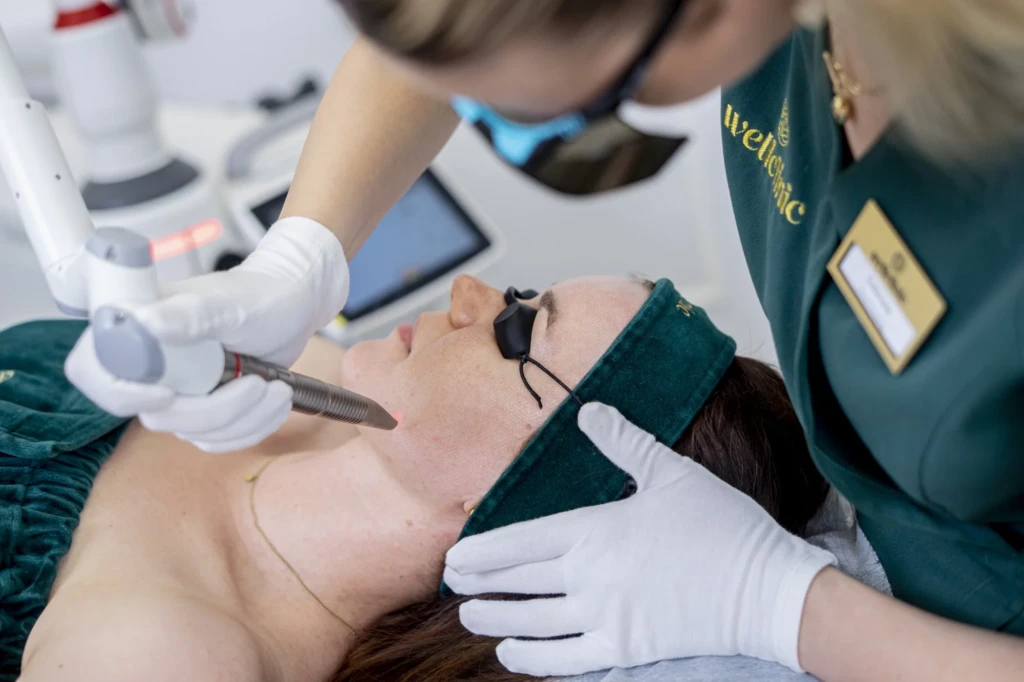
In certain cases, particularly where combination skin is accompanied by acne lesions, the following is used laser acne treatment. Laser energy It can affect various skin structures and support the skin’s remodelling processes. The treatment requires a prior assessment of the skin’s condition and the appropriate selection of parameters to suit its needs.
Combination skin - how should you look after skin with different needs?
Combination skin It can be difficult to look after, as one part of the face quickly becomes oily, whilst the other remains dry, tight or prone to irritation. Attempting to „dry out” the entire skin in an effort to reduce sebum can backfire and actually worsen its condition.
That is why skincare should address the specific needs of different areas of the face. Gentle cleansing, adequate moisturising, regulating sebum production and sun protection help to keep the skin in better balance.
If, despite your skincare routine, you experience blackheads, blemishes, dryness or irritation, whilst consultation A skin specialist will assess the condition of your skin and recommend the most suitable solutions.
Sources:
- American Academy of Dermatology (AAD) „Skin care basics"
https://www.aad.org/public/everyday-care/skin-care-basics - American Academy of Dermatology (AAD) „How to manage oily skin"
https://www.aad.org/public/everyday-care/skin-care-basics/dry/oily-skin - PubMed „The effect of niacinamide on reducing sebum production in people with acne"
https://pubmed.ncbi.nlm.nih.gov/16766489/ - PubMed „Salicylic acid as a peeling agent: a comprehensive review"
https://pubmed.ncbi.nlm.nih.gov/20337804/ - PubMed „Retinoids in the treatment of skin ageing: an overview of clinical efficacy and safety"
https://pubmed.ncbi.nlm.nih.gov/23107592/ - Harvard Health „Sunscreen: What you need to know"
https://www.health.harvard.edu/staying-healthy/sunscreen-what-you-need-to-know




 +48 600 100 177