
 Katarzyna Pawłowska
  03.10.2025
 Table of contents
The skin doesn’t age simply because wrinkles suddenly appear. The problem starts earlier.
Over time, fibroblasts become less active, the production of collagen and elastin declines, and the skin loses its density, firmness and ability to regenerate effectively. Wrinkles are merely what we can see on the surface.
That is why effective anti-ageing does not always involve „filling” the skin. Sometimes it is more important to create the right conditions for the skin to activate its own regenerative processes more effectively.
One way of supporting these processes is exosomes for the face, which are one of the stages of therapy Quantum Face.
Exosomes for the face – how they work and their uses
Exosomes These are small extracellular vesicles that play a role in intercellular communication. They can transport various types of molecules, including proteins, lipids and RNA molecules.
In the context of cosmetology and aesthetic medicine, interest in exosomes is primarily due to their potential role in the skin’s regenerative processes.
They do not work like a traditional filler. They are not designed to alter facial features.
Their aim is to support the skin in processes that become less active as we age.
Therefore exosome therapy may be of interest to people who want to improve the condition of their skin but are looking for a natural result.
Why does the skin lose its ability to regenerate over time?
Young skin It doesn’t just look good. It recovers quickly.
As we age, the rate of these processes gradually slows down. The production of collagen and elastin decreases, and the skin becomes less elastic and more prone to losing moisture. Its structure changes, and wrinkles, discolouration and unevenness begin to appear.
And that is precisely why the very humidification It is not always enough.
It is possible to improve the appearance of the skin, but this does not always resolve the issue of its quality and ability to regenerate.
Exosome therapy is one way of supporting these processes.
Exosome therapy for the face – what does it involve?
The course of treatment depends on the protocol used. The first stage involves assessing the skin and determining the treatment objective. The method of application is then selected, along with any combination with other procedures.
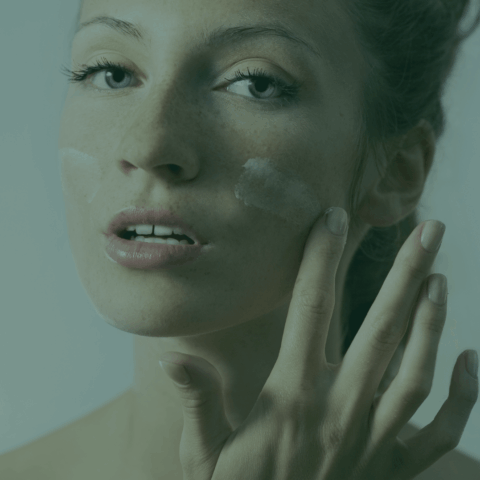
Depending on the protocol exosomes for the face They can be applied topically or used as part of a treatment to support skin regeneration following a suitably selected procedure.
This should always be preceded by a consultation. This is important because the same method will not be the best solution for every skin type.
Facial exosomes - treatment outcomes
The results of the treatment depend, amongst other things, on the initial condition of the skin, the product used, the method of application and whether it is combined with other procedures.
The aim of the therapy may be to improve:
- skin firmness and elasticity,
- its structure and quality,
- moisture content,
- appearance fine lines,
- skin tone,
- visibility scars and uneven patches,
- the overall condition of the skin.
However, the most important change does not necessarily have to be dramatic from one day to the next.
A well-planned treatment programme is primarily designed to improve the quality of the skin, so that it looks healthier, is firmer and has a more even texture.
Without altering the natural features of the face.
Exosomes and wrinkles and skin quality
Wrinkles are not the only sign of ageing.
Over time, the skin’s density, structure, moisture levels and ability to regenerate also change. Therefore, focusing solely on a single wrinkle does not always produce the result the patient is hoping for.
Facial exosomes They can form part of a treatment programme aimed at improving the condition of the skin.
However, they should not be regarded as a substitute for all anti-ageing treatments. The choice of treatment should depend on what is actually causing the deterioration in the skin’s appearance.
Sometimes the main problem will be a loss of firmness. At other times, it may be scarring, discolouration, an uneven texture or a loss of volume.
These are different problems. They require different solutions.
Exosomes and laser therapy – a combination of treatments
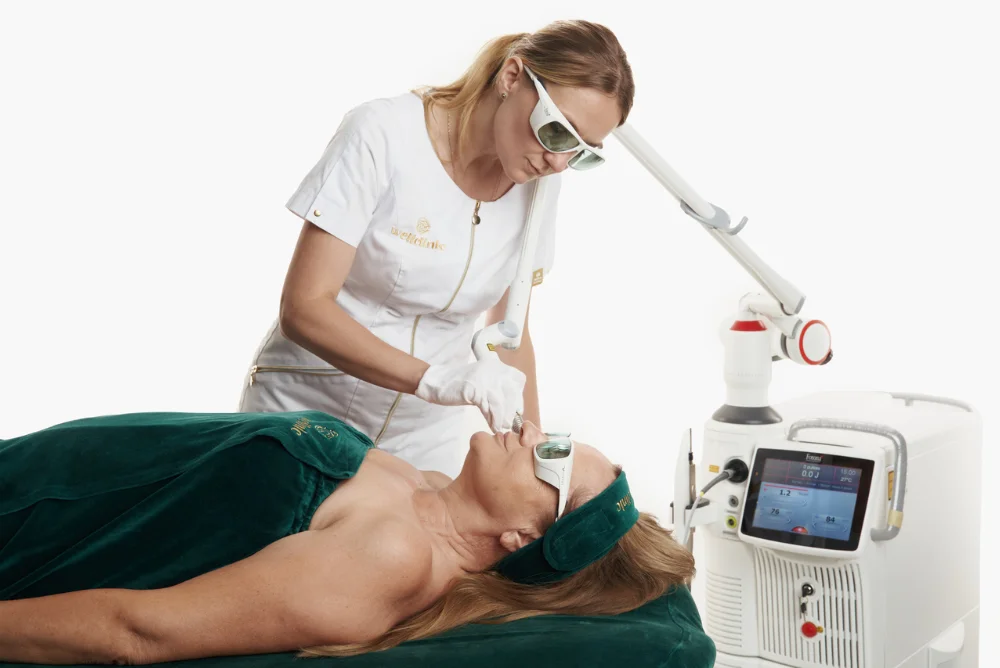
Exosomes They can be used as part of combination therapies. One example is combining them with a suitably selected laser therapy. The laser can target specific skin structures and stimulate remodelling processes, whilst preparations containing exosomes may provide additional support for regenerative processes.
Quantum Beam: the second stage of treatment Quantum Face uses exosomes combined with a carefully selected laser therapy, which prepares the skin for intensive regeneration and remodelling. The laser energy targets specific skin structures, whilst the use of exosomes provides additional support for the renewal processes. This combination allows us to focus not only on the superficial signs of ageing, but above all on improving the quality, firmness and texture of the skin.
The effects and process of skin regeneration
Skin regeneration is a process. Therefore, the results of the treatment should not be assessed solely immediately after it has been carried out.
The skin needs time to regenerate and for the repair processes to begin. The first changes in its appearance may become visible relatively quickly, but the full effect depends on the individual characteristics of the skin, the treatment protocol used and the number of sessions undertaken.
Nor is there a single course of treatment that is suitable for every patient.
The plan should take into account age, skin condition, the specific skin concern and the desired outcome. Skin that has lost its firmness may require a different approach to skin that has acne scars or an uneven structure.
Therefore, rather than copying a ready-made treatment plan, it is better to start by assessing the skin and planning a personalised treatment programme.
Exosomes for the face – who are they for?
Exosome therapy may be considered, particularly for people who notice:
- a loss of skin firmness and elasticity,
- the first signs of ageing,
- fine lines,
- deterioration in skin structure,
- uneven colouring,
- acne scars,
- tired, lacklustre skin,
- slower skin regeneration.
Facial exosomes They can also be an interesting part of a treatment programme for people who wish to improve the quality of their skin without altering its natural proportions.
Exosomes for the face – contraindications and safety
Not everyone can make use of exosome therapy.
Contraindications depend, amongst other things, on the product used, the method of application and the procedure with which it is combined. It is therefore essential to undergo a consultation and a detailed assessment of the condition of the skin and general state of health prior to treatment.
In the case of active skin infections, certain medical conditions, pregnancy, breastfeeding or the use of specific medicines, treatment may need to be postponed or may not be recommended.
The source and quality of the preparation, as well as the method of administration, are also important. Not all products described as „exosomes” are the same.
That is why it is not just the name of the therapy that matters, but the entire protocol for carrying it out.
A natural look rather than altering facial features
A well-planned rejuvenation treatment should not strip the face of its character.
This is particularly important for people who do not want a radical change in their appearance, but can see that their skin no longer looks the same as it used to. It is less firm, looks more tired, and fine lines, unevenness or a loss of density are becoming apparent.
Skin rejuvenation begins with a proper diagnosis
Facial exosomes This treatment forms part of a rejuvenation approach that focuses on skin quality rather than altering its natural appearance. Their potential lies in supporting regenerative processes, which is why the treatment may be considered in cases of reduced firmness, fine lines, uneven texture or other signs of skin ageing.
However, this does not mean that exosomes are the answer to every problem.
The skin ages in many different ways. For one person, the biggest challenge may be a loss of firmness, whilst for another it might be acne scars, discolouration, an uneven texture or a gradual loss of density. Therefore, the same treatment will not have the same impact on every patient.
A properly planned rejuvenation programme begins with a diagnosis, not with the choice of technology.
First, you need to determine, what has changed in the skin. Next, determine what effect you wish to achieve. Only then can you decide whether exosomes alone will suffice, or whether combining them with another therapy – such as laser therapy – will yield better results.
It is precisely this individualised approach that determines whether the treatment addresses the actual problem or merely its visible symptom.
If you want to improve the quality of your skin but don’t want to alter your natural facial features, Exosomes for the face may be one of the options worth considering.
Don’t start by asking: „Which treatment should I have?” Start with the question: „What does my skin need?”
The answer to these questions is the best starting point for planning effective, informed treatment.
If, when you look in the mirror, you notice that your skin has lost its firmness, has become less smooth, drier, or that fine lines have appeared, You don’t have to wait until the signs of ageing become more noticeable. Make an appointment for a consultation – A doctor will assess the condition and needs of your skin, discuss possible solutions and select a treatment tailored to the desired result. Exosomes They can form part of such a plan, either on their own or in combination with other methods. We carry out aesthetic medicine treatments at Wellclinic clinics in Warsaw, Gdańsk and Cracow.
Sure — in a clean format ready to paste:
Sources:
- PubMed „Skin ageing from the perspective of dermal fibroblasts: the interplay between adaptation to the extracellular matrix microenvironment and cell-autonomous processes”
https://pubmed.ncbi.nlm.nih.gov/37067763/ - PubMed „Age-Related Changes in the Fibroblastic Differentiation of the Dermis: Role in Skin Ageing”
https://pubmed.ncbi.nlm.nih.gov/35682813/ - PubMed „Ageing in the dermis: Fibroblast senescence and its significance”
https://pubmed.ncbi.nlm.nih.gov/38040661/ - PMC „Efficacy of Exosome-Based Therapies for Skin Rejuvenation: A Systematic Review of Human Studies”
https://pmc.ncbi.nlm.nih.gov/articles/PMC12933354/ - PMC „Exosomes in Skin Rejuvenation: A Systematic Review of Anti-Ageing Effects and Clinical Applications”
https://pmc.ncbi.nlm.nih.gov/articles/PMC12952817/ - PMC „The effectiveness of regenerative medicine for skin lightening and rejuvenation: a systematic review of extracellular vesicles and conditioned media”
https://pmc.ncbi.nlm.nih.gov/articles/PMC12465346/

 +48 600 100 177