A botched facelift may result in an outcome that differs from the patient’s expectations – both in terms of appearance and comfort following the procedure. The face may appear excessively tight, the natural proportions may be altered, or the expected improvement may not be achieved. In the case of surgical procedures, there is also a risk of complications associated with the manipulation of tissues.
At the result of the facelift There are many factors at play: the chosen technique, the scope of the procedure, the condition of the skin, individual predispositions and the way the entire treatment is planned. Therefore, before deciding on a rejuvenation treatment, it is worth determining exactly which problem you wish to address and which method will be best suited to it.
What does a botched facelift look like?
A properly planned facelift should improve tissue firmness and preserve the natural appearance of the face. The consequences of a botched facelift These may be evident, amongst other things, in the form of excessive skin tightness, an unnatural appearance of the facial features, asymmetry, or a result that is out of proportion to the patient’s expectations.
However, an unsatisfactory result does not always indicate an error during the procedure. The final appearance is also influenced by the healing process, the individual’s response and the patient’s expectations.
The aim of anti-ageing treatment should not be to completely erase all signs of ageing from the face. The best result is one that improves the skin’s firmness and quality, whilst preserving the natural proportions and character of the face.
What are the complications following a facelift?
Surgical facelift It is a procedure that involves surgical intervention, and therefore – like other operations – carries a risk of complications. Depending on the technique used, these may include, amongst others,clicking, haematomas, sensory disturbances, healing problems, scarring or asymmetry.
The risk and nature of complications arising fromdepend, amongst other things, on the scope of the operation, the technique used and the patient’s individual characteristics. For this reason, eligibility for surgery should include a detailed consultation and assessment of the patient’s health.
It is also worth bearing in mind that Complications following a facelift do not necessarily mean the procedure was unsuccessful. Some symptoms, such as swelling or temporary sensory disturbances, may be part of the normal recovery process.
What should you do after a botched facelift?
If lifting effect If the result is unsatisfactory, the first step should be to consult a specialist. It may be too early to assess the face immediately after the operation, as the tissues need time to heal and stabilise.
If the changes persist, a doctor can assess their cause and determine the possible course of action. Depending on the situation, this may include monitoring, treatment of complications, corrective procedures or the use of other methods to improve the appearance of the skin.
It is not worth deciding to undergo another procedure simply because you are disappointed with the initial result. The most important thing is to establish exactly what caused the unsatisfactory result and whether another procedure is really the best course of action.
Laser facelift versus surgical facelift
Not every case of loss of skin firmness requires surgery. In cases of mild or moderate sagging, treatments using laser energy may be considered, as they allow the skin’s quality and tone to be improved without the need for surgical incisions.
One such procedure is 4D endolifting made using Fotona platforms. Multi-stage therapy allows treatment to target different levels of tissue – including from within the oral cavity – and to combine work on skin tone, structure and quality.
Laser facelift However, it is not the equivalent of surgery. The scope of what each method can achieve differs, so the choice should be based primarily on the degree of tissue laxity and the desired outcome.
Is a non-surgical facelift suitable for everyone?
Scalpel-free face lift It may be considered for people whose main concern is a loss of skin firmness and quality, without the need for surgical repositioning or removal of excess tissue.
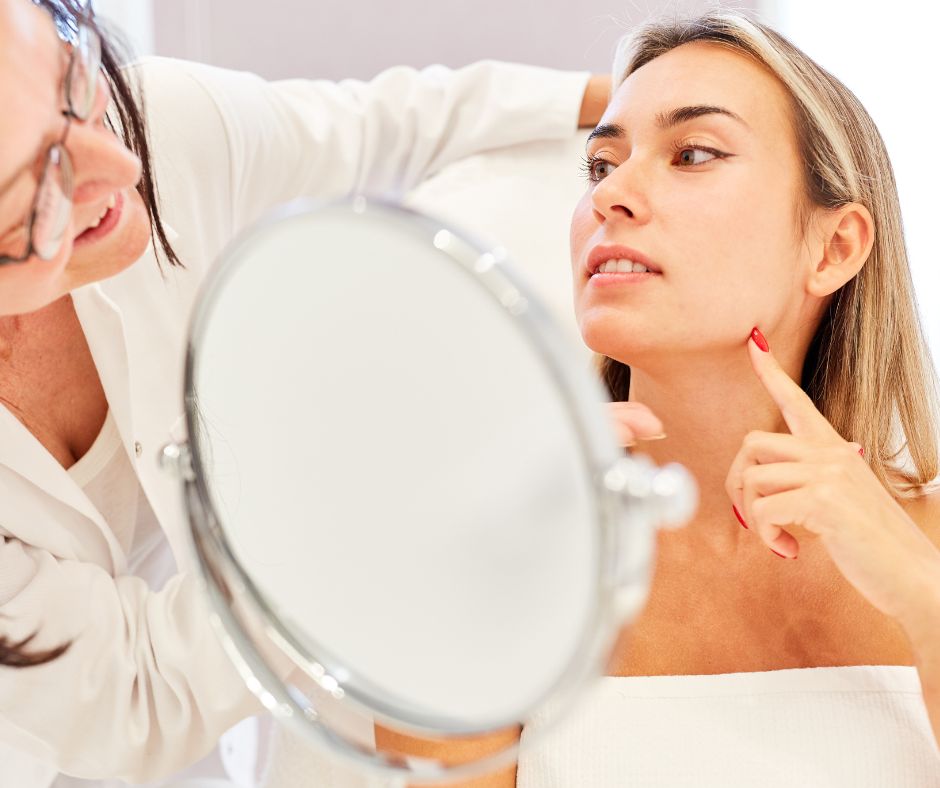
During the consultation, the specialist assesses, amongst other things, the degree of sagging, skin quality, facial proportions and the patient’s expectations. Only on this basis can it be determined whether laser therapy, another aesthetic medicine treatment or a surgical consultation would be appropriate.
How can you avoid a botched facelift?
The basis is proper assessment and a realistic evaluation of the capabilities of the chosen method. Not every procedure will be suitable for every type of skin laxity, and the expected result should be in line with what a particular technology or surgical technique can actually achieve.
Before making a decision, it is worth asking a specialist about the possible outcomes, the limitations of the procedure, the recovery period and the potential risks. This approach allows you to make an informed choice of method and minimise the risk of being disappointed with the result.
A natural look starts with the right choice
Facial rejuvenation should not involve fighting every single wrinkle at any cost. The most important thing is to preserve the face’s proportions, facial expressions and character, whilst improving its texture and firmness.
A botched facelift He often points out that a more invasive method does not always mean a better result. It is crucial to diagnose the problem correctly and choose a procedure that is tailored to the actual needs of the tissues. In cases of less severe sagging, a carefully selected alternative to a surgical facelift may be laser therapy, which allows treatment of the skin without the need for surgical incisions.
If you notice a loss of firmness, changes to your facial contours or the first signs of ageing, you don’t have to opt for surgery straight away. Start with a consultation with our specialist and find out what modern aesthetic medicine can do for your skin.
Sources:
- NHS „Facelift (rhytidectomy)”
https://www.nhs.uk/tests-and-treatments/cosmetic-procedures/cosmetic-surgery/facelift/ - PubMed „A Systematic Review of Rhytidectomy Complications and Prevention Methods: Evaluating the Trends”
https://pubmed.ncbi.nlm.nih.gov/40459450/ - PubMed „Facelift Surgery and Nerve Injury: A Systematic Review and Meta-Analysis”
https://pubmed.ncbi.nlm.nih.gov/40456989/ - PubMed „Comparing the Safety and Efficacy of Superficial Musculoaponeurotic System and Deep Plane Facelift Techniques: A Systematic Review and Meta-analysis”
https://pubmed.ncbi.nlm.nih.gov/40600822/ - PubMed „A Systematic Review and Meta-Analysis of Early Relapse After a Facelift”
https://pubmed.ncbi.nlm.nih.gov/35534779/ - PubMed „Evolution of Superficial Muscular Aponeurotic System Facelift Techniques: A Comprehensive Systematic Review of Complications and Outcomes”
https://pubmed.ncbi.nlm.nih.gov/38283861/