
 Katarzyna Pawłowska
 01.10.2026
 Table of contents
A constantly blocked nose, breathing through the mouth, snoring and waking up in the middle of the night. If these problems recur almost every day, you shouldn’t treat them as a mere nuisance. The cause may be hypertrophy of the nasal turbinates, curvature of the nasal septum or any other condition that impedes airflow.
Laser rhinoplasty may help to improve nasal patency, if the problem is caused by enlarged adenoids. However, it is not a suitable method for every patient. Before the procedure, the doctor carries out a consultation and an ENT examination to determine the cause of the symptoms and whether the procedure is suitable laser therapy.
It is also worth noting that laser rhinoplasty i laser treatment of snoring These are two different procedures. Although they may address similar conditions, they affect different structures and have different aims.
What is laser rhinoplasty?
Laser rhinoplasty this term is used, amongst other things, to refer to procedures designed to reduce the volume of hypertrophied nasal conchae. Their aim is to increase the space inside the nose and make it easier to airflow.
The nasal turbinates are located inside the nasal cavity. They warm, moisten and clean the air we breathe in. If their tissue grows excessively or becomes chronically swollen, this can lead to a narrowing of the passage through which air flows.
The patient then feels a blocked nose, has difficulty breathing and sometimes also finds it harder to sleep. These symptoms may persist even when there is no infection.
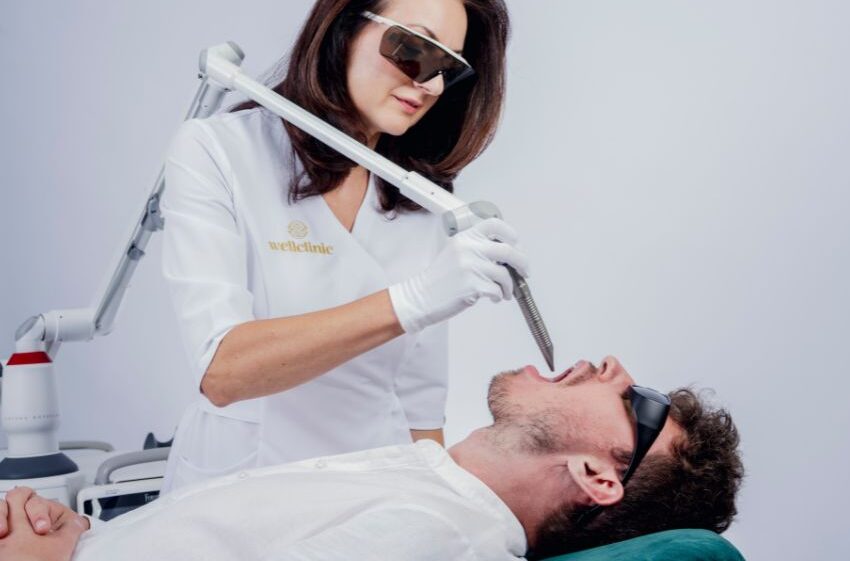
During the procedure, the doctor uses laser energy to apply a controlled effect to the tissues of the nasal turbinates. Depending on the technique used, the procedure may result in a reduction in their volume and an improvement in nasal patency.
The procedure is often carried out in under local anaesthetic. It does not usually require hospitalisation, but the exact procedure, preparation and post-procedure advice depend on the method chosen and the patient’s state of health.
It is important not to confuse this procedure with surgical rhinoplasty. Laser rhinoplasty In this context, it primarily concerns improving breathing, rather than changing one’s outward appearance.
When can laser rhinoplasty help?
Chronic blocked nose has various causes. In one person, it is caused by an allergy; in another, crooked nasal septum, and in the next one hypertrophy of the nasal turbinates.
Laser reduction of the nasal turbinates may be considered when their enlargement impedes breathing and conservative treatment does not bring about sufficient improvement.
Symptoms that warrant consultation with an ENT specialist include:
- a persistent feeling of a blocked nose;
- difficulty breathing through the nose, even without a runny nose;
- recurrent blocked nose;
- the need to breathe through the mouth frequently;
- a reduction in sleep quality due to difficulty breathing.
The mere presence of these symptoms does not necessarily mean that laser treatment will be the best option. First, the cause of the problem must be identified. In some cases, it may be sufficient to pharmacological treatment, for example, those designed to treat allergies or chronic inflammation of the nasal mucosa.
If symptoms persist despite treatment, the doctor may consider surgery and discuss the potential benefits, limitations and risks with the patient.
Laser rhinoplasty and a deviated nasal septum
A blocked nose does not always mean that the turbinates are enlarged. Another common cause of breathing difficulties is curvature of the nasal septum, i.e. the structure separating the right and left nasal cavities.
Both conditions can produce similar symptoms, but require different treatment.
If the blockage is caused by enlarged turbinates, the doctor may consider reducing their size, including using a suitable laser technique. In the case of significant septal deviation, it may be necessary to septoplasty, i.e. surgical correction of the nasal septum.
It also happens that a patient has both a deviated septum and enlarged turbinates. In such cases, the doctor assesses which of these conditions is responsible for the symptoms and whether a combination of treatment methods is required.
That is why, before deciding to laser rhinoplasty it is essential that ENT examination. The treatment should address the specific cause of the blockage, rather than just the sensation of being blocked.
What does a laser rhinoplasty procedure involve?
The procedure is preceded by ENT consultation, during which the doctor takes a medical history regarding the symptoms, their duration and any previous treatment. They also assess the structure of the nose and the patency of the nasal passages. Depending on the circumstances, they may carry out or request further tests.
If a patient is eligible for the procedure, the doctor will explain how it will be carried out and provide advice on how to prepare for it.
The procedure itself involves the controlled application of laser energy to the tissue of the nasal conchae. The exact procedure depends on the type of equipment and the technique used by the doctor.
The procedure is often carried out in under local anaesthetic and does not require a stay in hospital. However, this does not mean that you can disregard the medical assessment or post-treatment recommendations.
Following the procedure, you may experience temporary swelling, dryness of the mucous membrane, irritation or a temporary worsening of nasal congestion. An improvement in nasal patency is not always noticeable straight away. The healing time and the onset of results depend on the method used and the individual response of the tissues.
After the procedure, you should follow your doctor’s advice, including guidance on caring for and moisturising your nose, as well as attending follow-up appointments.
What results can you expect from laser rhinoplasty?
The main aim of the procedure is improved airflow through the nasal cavity. For suitably selected patients, this can mean easier breathing through the nose, a reduced feeling of congestion and improved everyday comfort.
If blocked nose If it makes it difficult to fall asleep or forces you to breathe through your mouth at night, improving airway patency may also have a positive effect on your sleep comfort.
However, one should not assume that every patient will achieve the same result. The outcome depends on the cause of the obstruction, the degree of turbinate hypertrophy, any underlying medical conditions and the technique used.
Laser rhinoplasty Nor does it guarantee that all symptoms associated with snoring will disappear. If the problem stems from the structure of the throat, a flaccid soft palate or obstructive sleep apnoea, separate diagnostic tests and a different course of treatment may be required.
Snoring and a blocked nose – what is the link between them?
Snoring It is a sound caused by the vibration of tissues in the upper respiratory tract during sleep. It may be linked, amongst other things, to a narrowing of the airway and the relaxation of tissues during sleep.
A blocked nose can contribute to snoring. When airflow through the nose is restricted, breathing becomes less comfortable and the patient may breathe through their mouth more often. However, this does not mean that everyone who snores has a problem with their nasal turbinates.
The structure of the soft palate and throat, sleeping position, body weight and other anatomical and health-related factors are also significant.
If snoring is accompanied by a chronically blocked nose, it is worth checking whether clearing the nasal passages might help. However, if the cause of the snoring lies outside the nasal cavity, simply laser rhinoplasty It might not be enough.
Laser treatment for snoring – what does it involve?
Laser treatment of snoring This is a separate procedure which may be considered for selected patients when the problem is caused by vibrations in specific tissues of the upper respiratory tract, for example soft palate.
The laser energy causes controlled heating of the tissues, leading to their remodelling and increased firmness. The aim is to reduce the vibrations responsible for the production of sound during sleep.
To determine whether a patient is suitable for this procedure, it is necessary to establish the cause of the snoring. The results depend on the anatomy of the upper airways and the individual response of the tissues.
Laser treatment of snoring should not be equated with laser rhinoplasty. The first procedure may involve the tissues responsible for snoring, whilst the second aims to improve nasal airway patency by reducing enlarged turbinates.
This distinction is important when choosing a course of treatment. Treatment should be tailored to the cause of the problem, rather than solely to how loudly the patient snores.
Snoring or sleep apnoea? Symptoms that should not be ignored
Loud snoring does not always mean sleep apnoea, but it may be one of its symptoms. Obstructive sleep apnoea It is a disorder in which, during sleep, there are repeated episodes of narrowing or closure of the upper airways. Airflow is then restricted or stops.
Such episodes can cause a drop in blood oxygen levels and repeated, not always conscious, awakenings. Sleep becomes less restorative, and the patient may also feel the effects of the problem during the day.
At sleep apnoea may indicate:
- loud, regular snoring;
- breathing pauses noticed by one’s partner;
- waking up with a feeling of suffocation or gasping for air;
- morning headaches and a dry mouth;
- excessive daytime sleepiness;
- difficulty concentrating and a feeling of not having had enough sleep, despite having slept for a reasonable amount of time.
Untreated obstructive sleep apnoea is associated, amongst other things, with an increased risk of high blood pressure and cardiovascular complications. Drowsiness may also increase the risk of accidents, particularly when driving.
If you notice these symptoms in yourself, or if someone in your household notices that you’re stopping and starting when you breathe, don’t just look for ways to reduce your snoring. What you need is medical consultation and, depending on the specialist’s assessment, sleep diagnostics.
Does laser rhinoplasty treat sleep apnoea?
Laser rhinoplasty may improve nasal patency in patients with the appropriate indications, but is not a stand-alone, universal treatment obstructive sleep apnoea.
In some people, a blocked nose occurs alongside apnoea and makes it difficult to breathe whilst sleeping. Treating this can improve breathing comfort and, in certain situations, also make it easier to undergo apnoea treatment. However, this does not mean that clearing a blocked nose will eliminate episodes of the throat closing up.
In the treatment of obstructive sleep apnoea Various methods are used, depending on the severity of the condition and the patient’s circumstances. Until a few years ago, the treatment of sleep apnoea was based primarily on CPAP therapy and surgical procedures. However, advances in medicine have led to the development of less invasive methods that can support the treatment of snoring and certain sleep-related breathing disorders. One of these is treatment of snoring using a laser, aimed at improving the tone of the tissues of the soft palate and throat.
If apnoea is suspected, the diagnosis must first be confirmed. Only then can a decision be made as to whether surgery on the nose or other tissues would be a justified part of a broader treatment plan.
Contraindications and safety considerations for laser rhinoplasty
Not every patient is eligible for the procedure. Before making a decision, the doctor assesses the condition of the nasal mucosa, the cause of the blockage, any underlying medical conditions, the patient’s current medication and other factors that may affect the safety of the procedure.
It is also important to consider whether the symptoms stem from a problem that the laser can effectively treat. If the cause is primarily curvature of the nasal septum, an allergy or other medical condition, a different course of action may be required.
Following the procedure, you may experience swelling, dryness, irritation, minor bleeding or a temporary reduction in nasal patency. The type and severity of side effects depend on the technique used and your individual response. Detailed information on the risks and recommendations should be provided by your doctor during the assessment.
You should not stop taking your medication or change how you take it before the procedure without consulting your doctor first.
Laser rhinoplasty – when should you book a consultation?
If you’ve had this for quite some time blocked nose, if you breathe through your mouth or wake up feeling as though you haven’t had enough sleep, it is worth finding out the cause of these symptoms. Treatment is not always necessary, but chronic breathing problems should not be ignored.
During ENT consultation The doctor will assess nasal patency, investigate possible causes of obstruction and determine whether conservative treatment is advisable, laser reduction of the nasal turbinates or another procedure. If snoring is also present, it is necessary to assess whether it is caused by a blocked nose or by a problem in another part of the upper respiratory tract.
If you suspect sleep apnoea Further diagnostic tests may be necessary.
Don’t choose a treatment based solely on your symptoms. Find out what is actually making it difficult for you to breathe. An accurate diagnosis enables treatment to be tailored to the cause of the problem, rather than simply to its most troublesome symptoms.
Sources:
1. PubMed „Systematic Review of Surgical Interventions for Inferior Turbinate Hypertrophy” https://pubmed.ncbi.nlm.nih.gov/36315624/
2. PubMed „Update on the surgical management of inferior turbinate hypertrophy in adults” https://pubmed.ncbi.nlm.nih.gov/25565284/
3. PubMed Central „”Surgical Interventions for Inferior Turbinate Hypertrophy: A Comprehensive Review of Current Techniques and Technologies”
https://pmc.ncbi.nlm.nih.gov/articles/PMC8038107/
4. PubMed „An Evidence-Based Approach to the Management of Snoring in Adults” https://pubmed.ncbi.nlm.nih.gov/25346027/
5. Clinical Practice Guideline „Clinical Efficacy of Nasal Surgery in the Treatment of Obstructive Sleep Apnoea” https://pmc.ncbi.nlm.nih.gov/articles/PMC10471902/
6. International Consensus Statement „International Consensus Statement on Obstructive Sleep Apnoea” https://pmc.ncbi.nlm.nih.gov/articles/PMC10359192/
7. PubMed „Efficacy of laser-assisted uvulopalatoplasty”
https://pubmed.ncbi.nlm.nih.gov/9261787/
8. PubMed „Radiofrequency Ablation Turbinoplasty versus Microdebrider-Assisted Turbinoplasty: A Systematic Review and Meta-analysis”
https://pubmed.ncbi.nlm.nih.gov/26450750/
9. PubMed Central „Management of Obstructive Sleep Apnoea in Adults: A Review” https://pmc.ncbi.nlm.nih.gov/articles/PMC7505527/



 +48 600 100 177