
 Katarzyna Pawłowska
 08.09.2026
 Table of contents
Acne It is primarily associated with spots, blackheads and excessive sebum production. That is why the first instinct is often to reach for skincare products designed to "dry out" the skin.
Meanwhile, the modern approach to acne treatment is much more złożone. Increasing attention is being paid to the condition of the skin barrier, chronic inflammation, diet and how well the skin tolerates the treatment being used.
This does not mean that a single new method has emerged to replace tried-and-tested dermatological treatments. On the contrary - the latest guidelines continue to base treatment primarily on methods with the best-documented efficacy. At the same time, there is a growing body of evidence showing that appropriate skincare and certain lifestyle choices can be an important complement to treatment.
1. Restoring the hydrolipid barrier rather than constantly drying out the skin
This is one of the greatest paradoxes of acne-prone skin care: you can have oily skin and, at the same time, a damaged skin barrier.
Research indicates that, amongst other things, changes occur in the lipid composition of the stratum corneum in acne-prone skin. The problem may be further exacerbated by treatment - retinoids and benzoyl peroxide are effective, but in some people they cause dryness, flaking, redness and irritation.
That is why there is increasing talk of barrier care hydrolipid as part of the treatment, rather than something to be stopped whilst undergoing treatment.
Of particular interest are ceramides - lipids naturally present in the stratum corneum. In a study involving people undergoing treatment adapalene and benzoyl peroxide The addition of products containing ceramides was associated with reduced dryness, redness and flaking, as well as a more rapid improvement in skin barrier parameters. Furthermore, fewer inflammatory lesions were observed in the group using ceramide-based skincare.
The authors of a review on acne and the skin barrier emphasise that skincare should form part of the treatment and the subsequent maintenance of its effects.
What does this mean?
Rather than increasing the intensity of your cleansing routine every day, it’s worth opting for a gentle cleanser and moisturising cream, preferably containing ingredients that support the skin barrier, such as ceramides. The aim is not to "grease up" the skin, but to reduce irritation and help it tolerate the appropriate treatment more effectively.
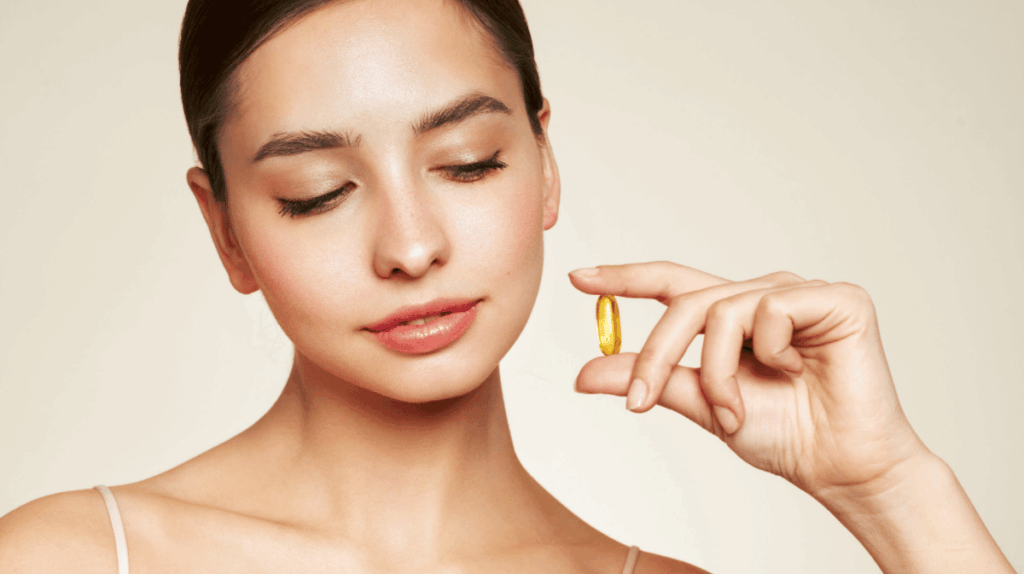
2. Omega-3 - can you help treat acne from the inside?
Inflammation is one of the key factors in acne. This is precisely why omega-3 fatty acids are attracting the attention of researchers, particularly EPA and DHA.
This is no longer merely a hypothesis. In a randomised trial involving 45 people with mild or moderate acne, the participants received a total of 2,000 mg EPA i DHA daily for 10 weeks. In the group omega-3 the number of both has decreased inflammatory changes, as well as non-inflammatory ones. The researchers also noted a reduction in markers associated with inflammation.
A study published in 2024 also provided some interesting findings. It involved 60 people with acne who followed a Mediterranean diet and took omega-3 supplements for 16 weeks. At the start of the study, 98.3% of the participants were found to have a deficiency EPA/DHA, and after 16 weeks an improvement was observed in both both inflammatory and non-inflammatory changes.
Does this mean that omega-3 fatty acids Are they a new treatment for acne? No.
The research is interesting, but there are still relatively few studies. Omega-3 should be regarded as a potential aid, rather than a substitute for dermatological treatment.
In practice, the first step might simply be to increase the proportion of natural sources of omega-3 in the diet, primarily oily fish.
3. A low-glycaemic-load diet instead of an "acne diet"
Over the years, the topic diet and acne It was full of oversimplifications: „chocolate causes spots”, „dairy products are always bad for you”, „you just need to cut out sugar”. The reality, however, is far more complex.
One of the better-known areas of research is the impact of low-glycaemic-load diets. The main aim is to limit products that cause sharp rises in the level of glucose and insulin, rather than focusing on eliminating one specific product. A possible mechanism includes, amongst other things, the impact of insulin and IGF-1 for production sebum, keratosis and inflammatory processes associated with the development of acne lesions.
However, this does not mean that A diet can replace dermatological treatment. Current guidelines indicate that the evidence regarding dietary interventions is still insufficient to recommend a specific „acne diet” as a standard treatment. However, diet may be a component of healthy lifestyles and as a complement to an appropriately chosen treatment.
Increasing attention is also being paid to gut microbiota and the so-called. the gut-skin axis. Research suggests that the composition of the microbiota and the metabolites it produces may influence the immune response and inflammatory processes, which play a role in the course of acne. However, this is still an evolving area of research and there is currently insufficient evidence to probiotics or treat other interventions targeting the microbiota as a standalone treatment for acne.
Therefore, instead of a restrictive „anti-acne diet” A more sensible approach is a diet based on a varied range of foods, as mprocessed products. In practice, it is worth limiting the amount of such products by high glycaemic load and sweetened drinks, and increase the share of vegetables, wholegrains, pulses and sources of healthy fats. This approach is more in line with the current state of knowledge than eliminating individual products without clear grounds for doing so.
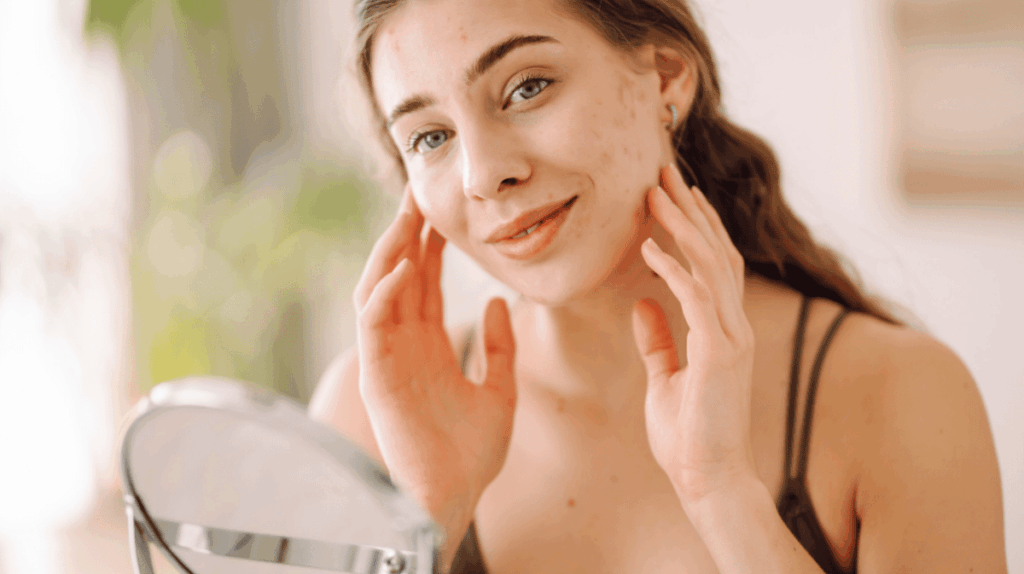
4. Using fewer cosmetics may mean better skin
Acne-prone skin It often becomes a testing ground.
One acid in the morning. Another in the evening. Exfoliation twice a week. A cleansing mask. A serum. A spot treatment for each blemish. Plus a powerful cleansing gel.
The problem is that the combination of all these products may cause more irritation than it does good.
In 2024, a consensus statement on the care of adult acne-prone skin was published. The authors point out that skin barrier dysfunction is of significant importance in acne, whilst dryness, oiliness and irritation may also occur as side effects of standard treatments. If these are not properly managed, they may lead to poorer adherence to treatment.
This is an important point: An effective treatment is not just a product that works on acne, but also a regime that we are able to follow regularly.
That’s why sometimes the best change you can make to your skincare routine is to cut out a few products.
5. Don’t look for a single "miracle ingredient"
Modern acne treatment It is looking less and less like a search for a single magic product.
Acne It is a multifactorial condition. Among other things, the following are significant: dyskeratosis follicularis, increased sebum production, inflammatory processes and changes occurring within the hair-sebaceous unit.
Consequently, the current guidelines from the American Academy of Dermatology cover several groups of treatments that target different mechanisms of the disease. The recommended methods include, amongst others, topical retinoids, benzoyl peroxide and selected combination therapies.
The same approach can be applied to your daily skincare routine.
Instead of using five products with similar effects, it is better to follow a simple routine:
- an anti-acne product tailored to the type of blemish,
- gentle cleansing,
- hydration and barrier support,
- daily sun protection.
In the case of ingredients from the group retinoids It is worth bearing in mind that not every product works in the same way.
It is only later that it is worth considering whether further components are required.
Acne is not just a problem affecting the surface of the skin
The most interesting change in the approach to acne vulgaris It is based on the fact that we are increasingly viewing the skin as a whole.
It is no longer simply a matter of removing sebum or "drying out" the lesion. The condition of the skin barrier, the level of irritation, tolerance to treatment and – potentially – certain lifestyle factors also play a role.
If they occur primarily blackheads, it is worth knowing how they differ from inflammatory changes.
The strongest evidence continues to relate to established dermatological treatments. However, proper care of the skin barrier can help the skin tolerate these treatments better, and approaches such as omega-3 supplements or dietary changes are interesting areas of research which may, in the future, provide even more data.
If acne it is severe, painful, and leaves scars or persists despite proper skincare, it is worth consulting a dermatologist. In such cases, experimenting with cosmetics and supplements on your own may not be enough.
What really matters in the fight against acne
Effectively combating acne does not necessarily mean using increasingly harsh cleansers and a succession of products that dry out the skin. It is also important to restore the hydrolipid barrier, minimise irritation, follow a proper skincare routine and adopt a mindful approach to diet and lifestyle.
If your acne keeps coming back, is severe, or leaves behind discolouration and scars, there’s no point in endlessly trying out different skincare products. Consulting a specialist allows you to assess the condition of your skin and choose a treatment plan suited to the type and severity of your condition.
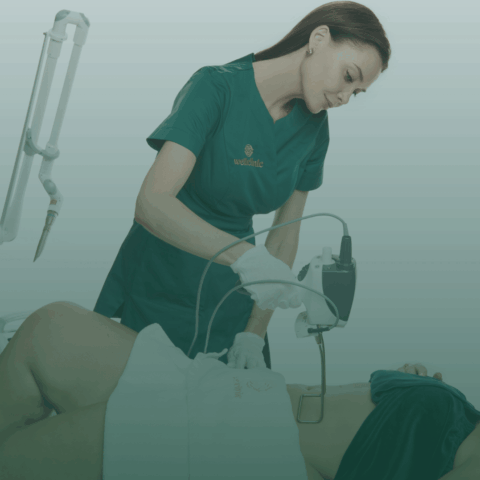
At Wellclinic, you can have your skin condition assessed and find out which treatment options would be suitable for you. If the indication is active acne, A specialist may also consider using a suitably selected laser therapy.
Sources:
- PubMed „Guidelines for the management of acne vulgaris”
https://pubmed.ncbi.nlm.nih.gov/38300170/ - PubMed „Acne and diet: a review”
https://pubmed.ncbi.nlm.nih.gov/34423427/ - PubMed „Acne and the cutaneous microbiome: A systematic review of mechanisms and implications for treatments”
https://pubmed.ncbi.nlm.nih.gov/39269130/ - American Academy of Dermatology (AAD) „Clinical Guideline on Acne”
https://www.aad.org/member/clinical-quality/guidelines/acne - European Dermatology Forum (EDF) „European S3 Guideline on the treatment of acne”
https://www.edf.one/home/Guidelines/Guideline-for-the-Treatment-of-Acne.html - DermNet „Acne”
https://dermnetnz.org/topics/acne




 +48 600 100 177